Child Teeth Grinding: What Nighttime Grinding and Snoring Can Mean
In short: Child teeth grinding at night isn't the diagnosis — it's a signal. In children, teeth grinding and snoring can signal a restricted airway: a narrow upper jaw, a tongue that sits low, or mouth breathing during sleep. An evaluation at an airway-focused pediatric dental office determines what's actually going on — and what, if anything, needs treatment.
I'm Dr. Nina Izhaky. A worried parent's search at 1 AM usually sounds like this: my child grinds teeth at night, what should I do. Here's my honest answer: don't panic, don't ignore it, and don't start with a mouth guard from the internet. Grinding in children is common — but it deserves an evaluation, because in growing kids it can signal that the airway needs attention. Let me explain what I check and why.
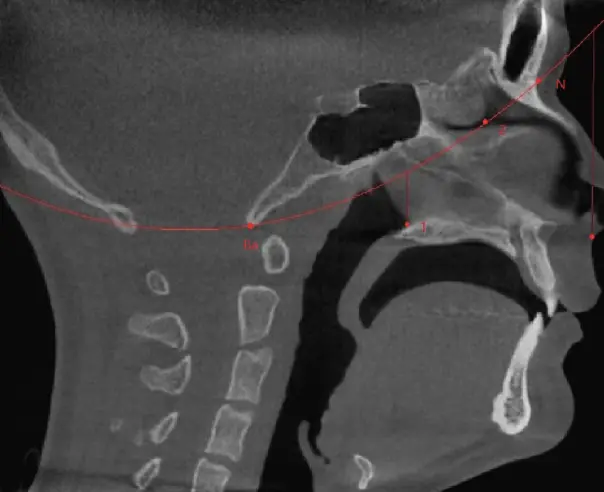
What grinding and snoring can signal
Not diagnoses — signals. An evaluation determines which, if any, apply to your child.
A restricted airway.
Teeth grinding and snoring in children can signal a restricted airway — a narrow upper jaw, or a tongue that can't rest on the palate where it belongs. The evaluation determines whether the airway is part of the picture.
Mouth breathing during sleep.
Children who breathe through their mouths at night often grind. Mouth breathing dries tissues and changes how the jaw grows — and it can signal that the airway needs an evaluation, not a lecture.
A growing jaw that needs room.
Crowding and grinding often travel together in growing children. Palatal expanders widen the upper jaw while it's still growing — more room for teeth, and a wider nasal airway.
Stress or habit — sometimes.
Not every grinder has an airway issue. Some children grind from stress or habit and outgrow it. The evaluation is what separates watch-and-wait from let's-act.
What an airway-focused evaluation checks
Here's exactly what we look at — and what we do with what we find.
How your child breathes
Nose or mouth, day and night. We ask about snoring, restless sleep, and morning headaches — and we look at tongue posture and lip seal.
Jaw growth and tooth wear
We examine wear patterns on the teeth, measure the upper jaw, and check whether the bite gives the tongue room to rest where it belongs.
What the options are
If the jaw needs room, a palatal expander may be recommended while your child is still growing. If not, we say so — watch-and-wait is a real answer.
When to come in
Grinding with snoring, restless sleep, or daytime tiredness deserves a visit sooner. Grinding alone with none of that? Still worth mentioning at the next checkup — and first visits happen by the first birthday.
Palatal expanders and growing airways
A palatal expander gently widens the upper jaw in a growing child. That means room for crowded teeth — and, because the upper jaw forms the floor of the nose, a wider nasal airway. When grinding and snoring trace back to a narrow jaw, an expander addresses the cause rather than the symptom.
Comfort-first — for worried kids and worried parents
Nobody forces an anxious child here. Evaluations use kid-friendly words, honest explanations, and a pace your child can handle. We also offer pediatric laser dentistry — gentler, often with less anesthesia. And for children with special needs, a full anesthesiologist means all treatment can be completed in a single carefully planned same-day visit.
Teeth grinding questions parents ask me
01My child grinds their teeth at night — what should I do?
Don't panic, and don't buy an internet mouth guard first. Book an evaluation: in children, grinding can signal a restricted airway, and the evaluation determines whether that's the case. Note any snoring, restless sleep, or daytime tiredness — that history helps us.
02My toddler snores — should I see a dentist?
Snoring in a young child is worth an evaluation. At an airway-focused pediatric dental office we check tongue posture, jaw growth, and mouth breathing — the evaluation determines whether the airway needs attention or whether watchful waiting is fine.
03Will my child outgrow teeth grinding?
Some children do. But grinding that comes with snoring, restless sleep, or crowded teeth deserves an evaluation rather than a wait-and-see assumption — because a narrow growing jaw is easier to guide now than to correct later.
04Do kids need mouth guards for grinding?
Rarely as a first step. In growing children, a guard protects teeth but doesn't address why the grinding happens. If the evaluation finds a narrow upper jaw, a palatal expander may be recommended — it addresses the cause while your child is still growing.
05My child is terrified of the dentist — can you still evaluate them?
Yes. We use kid-friendly words, honest explanations, and a pace your child can handle — never force. We also offer pediatric laser dentistry, which is gentler and often needs less anesthesia. For children with special needs, a full anesthesiologist allows all treatment in a single planned same-day visit.
Child teeth grinding in NYC
Tribeca Dental Studio 4 Kids is at 54 Warren Street in Tribeca, New York, NY 10007 — (212) 561-5303. Families come to us from SoHo, Battery Park City, the Financial District, Greenwich Village, the West Village, the East Village, Chelsea, the Lower East Side, Chinatown, Brooklyn Heights, Long Island City, Astoria, Jersey City, and Hoboken. We're open Monday–Friday 8am–7pm and Saturday–Sunday 9am–4pm.
Let's find out what the grinding means
Grinding is a signal, not a sentence. An airway-focused evaluation tells us which one it is. Call (212) 561-5303 or schedule online — we'll take it from there.