There is no single published price — cost depends on the individual treatment plan.
Understanding Treatment Cost
How Much Does a Palate Expander Cost for Kids?
How much does a palate expander cost for kids? There is no single published price — and there is a reason for that. The cost depends on your child's individual treatment: the type of appliance, how long treatment lasts, and what the orthodontic plan includes. Here is what actually determines the price, and how to get an exact number for your child.
The short answer
The main factors are the appliance type, treatment length, and case complexity.
An orthodontic evaluation is the only way to get an exact number for your child.
Overview
Why does the cost of a palate expander vary?
A palatal expander is not a product with a fixed price tag — it is a custom orthodontic treatment. The appliance itself is made for your child's mouth, and the fee reflects the evaluation, the custom appliance, the follow-up visits during expansion and retention, and the orthodontist's supervision throughout.
Two children rarely pay the same amount, because two treatments are rarely identical. A straightforward case that needs only expansion costs less to manage than a complex case where expansion is one phase of a longer orthodontic plan. That is why any honest answer about cost starts with an evaluation, not a number on a website.
Be cautious of anyone who quotes a price without ever examining your child. Orthodontic treatment planned without a proper diagnosis can cost far more in the long run — in retreatment, in time, and in results that do not hold.
What to Expect
How do I get an exact price for my child?
Evaluation
We examine the bite, alignment, and jaw development to determine whether an expander is appropriate.
Treatment plan
If an expander is recommended, we outline the full plan — appliance, timeline, and follow-up.
Written estimate
You receive a clear, itemized estimate before anything is decided — no surprises.
Your decision
Take the plan home, ask every question, and decide when you are ready.
Important Considerations
How should I compare estimates?
Early treatment that guides jaw growth can sometimes simplify later orthodontics — which matters when you compare long-term value, not just the first fee.
Dental benefit plans differ widely in what they cover for orthodontics; check with your plan administrator about your child's benefits.
A written estimate should spell out what is included — appliance, visits, and retention — so you can compare fairly.
The cheapest quote is rarely the best value in orthodontics; experience and careful planning protect your child's result.
Pediatric Dental Team
Meet Our Doctors
Our pediatric dental team evaluates each patient individually and explains recommended care, alternatives, and next steps.
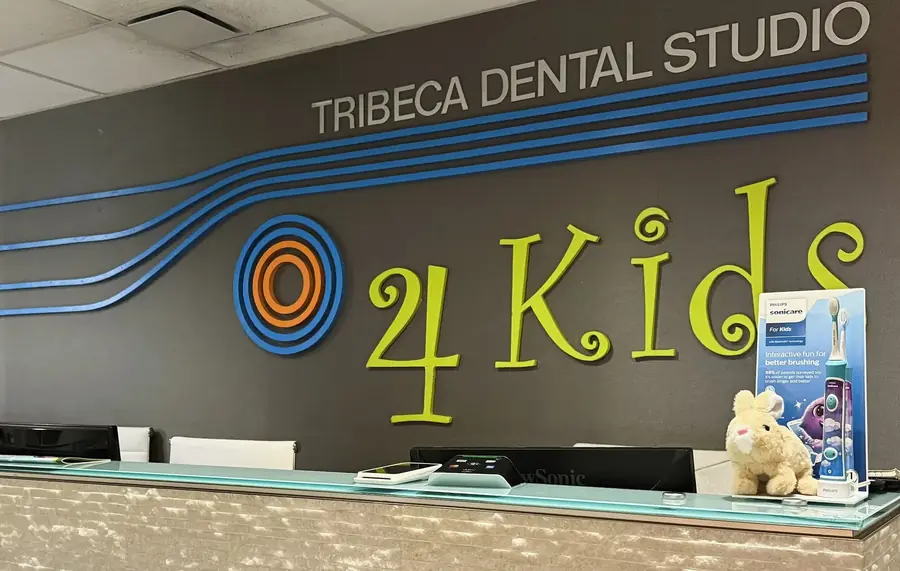
Tribeca Dental Studio 4 Kids
Dr. Lisa Schneider
View Profile →Tribeca Dental Studio 4 Kids
Dr. Rachel Iospa
View Profile →Tribeca Dental Studio 4 Kids
Dr. Tetiana Bass
View Profile →What to expect at your child's visit
Before you arrive, a little preparation helps your child walk in feeling ready. Talk about the visit in simple, positive words - a friendly check of their teeth, counting teeth, and keeping their smile strong - and try to avoid words that suggest pain. If this is a first visit, or if your child has lots of questions, reading a short picture book together about visiting the dentist can help.
Please bring a list of any medications your child takes, notes about allergies or health conditions, and your insurance card if you have one. If your child has a comfort item, like a small stuffed animal or blanket, they are welcome to bring it along. Arriving a few minutes early gives everyone time to settle in without rushing, meet the team, and let your child get used to the space.
During the visit, we move at your child's pace. We use a tell-show-do approach: we explain each step in kid-friendly language, show the tool or let your child see and touch it, and only then begin. Parents are welcome to stay close, hold a hand, and be part of the conversation throughout. The exam itself is gentle - we look carefully at the teeth, gums, and bite, and at how the jaws and face are developing.
We also check breathing and airway health as part of overall growth. When treatment is needed, we talk through options together first, including gentle laser dentistry with Biolase technology where it is a good fit, which can often mean less need for drills and numbing and a calmer experience for your child.
After the exam or treatment, we take time to explain what we found in plain, clear language, with no rushing out the door. You will leave with a clear written plan, including what to watch for at home, how to brush and floss for your child's age, and practical guidance on snacks, drinks, and habits such as thumb sucking or pacifier use. If follow-up care is recommended, we explain why, what it involves, and when it should happen, so there are no surprises later.
Our team at 54 Warren Street in Tribeca is here between visits too - if a toothache, a fall, or a new concern comes up, call us at 212-561-5303 and we will help you decide on the right next steps for your child.
How we help kids feel safe
Our office at 54 Warren Street, between West Broadway and Church Street in Tribeca, is designed to feel calm and welcoming for children and parents alike. Appointments are unhurried by design. We leave room for questions, for short breaks, and for extra time when a child needs it, because trust grows when children never feel rushed or talked over.
From the first hello, our team speaks directly to your child, listens carefully to what they are feeling, explains what will happen next, and celebrates small steps along the way, however small they may seem.
For many procedures, we can use pain-free Biolase laser dentistry, a gentle technology that often means less vibration, less noise, and a more comfortable experience than a traditional drill. It is one of the ways we try to make treatment feel manageable, even for children who have found dental visits hard before. We also look beyond teeth alone.
Airway and breathing health play an important role in sleep, focus, behaviour, and facial development, so we pay close attention to how your child breathes, sleeps, and grows, and we will talk openly with you if we notice anything that is worth exploring further together.
We warmly welcome anxious children and children with special needs, and we plan their care with particular care and thought. For children who need more support, treatment is planned in advance so that visits feel predictable, familiar, and as short as possible. Where it is appropriate, we offer anesthesiologist-supported care that allows necessary treatment to be completed in a single visit while your child sleeps safely and is closely monitored.
Every child is different, so we always start by listening to you as the parent - what has worked well before, what has been difficult, and what helps your child feel secure - and then we build the whole visit around that understanding.
Your child's plan and next steps
Every child leaves with a clear, written plan made just for them. It explains what we found at the visit, what is healthy and developing well, and anything that needs attention now or gentle monitoring over time.
We sequence care in a logical, calm order - urgent needs first, then any treatment, then prevention - and we explain the reason behind each step in plain language, so you can make informed decisions for your child without pressure and without feeling hurried into anything.
Prevention comes first whenever possible: regular checkups and cleanings, fluoride, sealants, and good daily home care protect growing smiles and can help avoid bigger treatment later on.
When your child's needs connect to orthodontics and braces, clear aligners for teens, palate expanders, or airway care, we coordinate that plan with you and explain how the different pieces fit together over months and years of growth, adjusting the plan thoughtfully as your child changes, grows, and reaches new stages.
Care at every age
Babies and toddlers: The earliest visits are short, gentle, and built around trust. When a first tooth appears, or around a first birthday, we invite parents to bring their little one in for a lap exam, where the child stays close to a parent while we look at the teeth, gums, tongue, and jaw as they develop. We talk through feeding, bottles and cups, thumb sucking and pacifier habits, teething comfort, and how to clean tiny teeth at home with a soft brush.
If a baby is tired or shy, we simply get to know each other, answer parent questions, and try again next time, so first experiences with the dentist feel safe and familiar.
Children: As children grow, visits focus on prevention first. We clean the teeth gently, check how baby teeth are coming out and adult teeth are coming in, and watch jaw growth, bite, breathing, and oral habits. Fluoride and sealants may be recommended to help protect teeth, and we show children how to brush and floss in ways they can manage themselves.
We also carry out early orthodontic checks, so if teeth or jaws need guidance, we can talk about timing early rather than waiting. Each visit includes time for parents, so you hear what we see, what can wait, and what deserves attention.
Teenagers: Older children and teens have different needs again. Prevention and careful monitoring continue, and we talk more directly with teens about their own habits, sports, and choices. Orthodontics and clear aligners for teens are part of our care when alignment or bite would benefit, and we explain the options to teens and parents together. We also monitor wisdom teeth, discuss mouthguards for sports, and keep an eye on breathing, sleep, and jaw comfort.
The aim is to help teenagers take ownership of their oral health as they move toward adult care, with respect for their growing independence.
Working with your child's other doctors
A child's dental health is connected to their whole development, so we gladly work with the other professionals who know your child. With a parent's consent, we can share findings with your pediatrician, an ear, nose and throat doctor, an orthodontist, or speech and myofunctional therapists, and we welcome their notes in return.
This matters for breathing and airway concerns, speech development, feeding questions, and orthodontic planning, where a shared view helps each part of care support the others. Parents stay at the center of every conversation, and nothing is shared without your permission.
FAQ
Frequently Asked Questions
Why don't you publish the price online?+
Because a responsible price depends on your child's mouth. The appliance is custom-made, and the treatment length and complexity differ from child to child. An evaluation lets us give you an exact, honest number instead of a misleading average.
Does insurance cover a palate expander?+
It depends on the plan. Dental benefit plans vary widely in their orthodontic coverage, and medical plans sometimes contribute when jaw development is involved. Check with your plan administrator about your child's benefits, and we will provide the documentation you need.
Is an evaluation really necessary before I get a price?+
Yes. Without examining the bite, alignment, and jaw development, any number would be a guess. The evaluation is what turns a guess into a real treatment plan with a real price.
Can early expansion save money on braces later?+
In some cases, guiding jaw growth early simplifies later orthodontic treatment, which can reduce its scope. It does not guarantee that no further treatment will be needed — but it can change what that treatment looks like.
What should a written estimate include?+
It should itemize the evaluation, the custom appliance, all follow-up visits during expansion and retention, and what happens after the expander comes out. If anything is vague, ask before you agree.
When should my child have their first dental visit?+
A good time for a first visit is when the first tooth appears, or around your child's first birthday. Early visits are short and gentle - mostly a careful look, guidance for you on brushing and feeding, and a chance for your child to get comfortable with us. Starting early helps us spot small concerns before they grow and builds positive habits from the beginning.
Can I stay with my child during treatment?+
Yes. Parents are welcome to stay close during visits and treatment, hold a hand, and be part of the conversation. For most children, having a parent nearby helps them feel safe and settled. If there is ever a moment where a different arrangement might help your child, we will explain why and agree it with you first.
How is laser dentistry different from a drill?+
Biolase laser dentistry uses focused light and water to treat teeth and soft tissue gently, often with less vibration and noise than a traditional drill. For many children it feels more comfortable, and it can sometimes reduce the need for numbing. It is not the right choice for every procedure, so we will explain when we recommend it and what the alternatives are.
What if my child is anxious or has special needs?+
Please tell us - we welcome anxious and special-needs children and plan care around them. That can mean quieter, more predictable visits planned in advance, extra time, and familiar steps. Where appropriate, anesthesiologist-supported single-visit care can allow treatment to be completed while your child sleeps. We start by listening to you and building a plan together.
How often should my child see the dentist?+
Most children are seen for regular checkups, so we can clean the teeth, watch growth closely, and catch small changes early. At each visit we suggest when to return, based on your child's teeth and development, and explain why.
What if my child needs treatment we cannot finish in one visit?+
We talk it through together and make a step-by-step plan, which may mean shorter visits over time. For children with special needs, or when a lot of care is needed, treatment in a single visit with support from an anesthesiologist may be an option, planned in advance with parents.
Related Pediatric Services
Tribeca Dental Studio 4 Kids
Questions About This Service?
Schedule a pediatric dental visit in Tribeca so our team can evaluate your child’s dental needs and discuss appropriate options.
This page provides general educational information and does not replace an individual dental examination, diagnosis, or treatment plan.