Crossbite in Kids: Early Treatment
October 15, 2026
A crossbite is when some of the upper teeth sit inside the lower teeth when your child bites down, instead of outside them where they belong. It can affect the front teeth, the back teeth, or one side of the mouth. Parents often notice it as a smile that looks a little uneven, or a jaw that seems to shift to one side when chewing. Unlike some bite issues that children outgrow, a true crossbite rarely corrects itself.
Why I treat crossbites early
When teeth meet the wrong way, the jaw learns to shift to make chewing work — and a growing jaw that shifts every day can grow asymmetrically. Early treatment guides the teeth and jaws into the right relationship while growth is still on our side. That is the core of Phase 1 (interceptive) orthodontics: guided jaw expansion and crossbite correction done at the age when the jaw responds most easily. Waiting until the teen years usually means a longer, harder correction.

What early treatment looks like
It depends on the type of crossbite and your child's age, which is why the specifics always come from an in-person evaluation. Common approaches include a palatal expander that gently widens the upper jaw over weeks, or small appliances that guide front teeth into place. Kids adapt fast — most are eating normally within days.
A question I hear a lot: can a crossbite wait until all the permanent teeth are in? For a true crossbite, waiting usually trades a simple early fix for a complex later one — the jaw keeps growing around the wrong bite the whole time. The exception is a mild functional shift that only appears when the child bites a certain way; that is exactly what the in-person evaluation sorts out. When in doubt, an early look costs nothing and can save years of treatment later. At every exam I also watch for mouth breathing red flags, since a narrow upper jaw and mouth breathing so often travel together, and I take radiographs only when they are clinically useful.
How we handle it under one roof
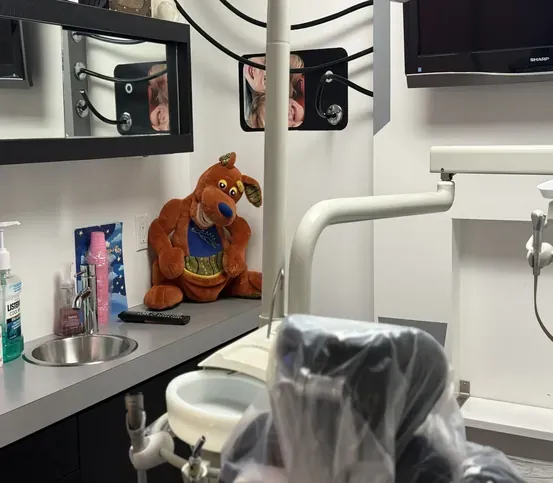
In our Tribeca office the pediatric dentist and orthodontist collaborate under one roof, so the crossbite plan fits with everything else going on in your child's mouth — cavities, growth, habits, all of it. If you have noticed your child's jaw shifting when they bite, do not wait for it to self-correct. Come see us at 54 Warren St (Mon–Fri 8am–7pm, Sat–Sun 9am–4pm) or call 212-561-5303.
Frequently Asked Questions
Will a crossbite fix itself as my child grows?
A true crossbite almost never self-corrects. If the bite looks off, have it evaluated rather than waiting.
At what age is crossbite treatment done?
Often between 7 and 10, while the upper jaw is still growing and responds well to gentle expansion — but the evaluation decides the timing.
Will treatment be painful for my child?
There is pressure and mild soreness for a few days when an expander is activated, then it fades. Most kids handle it well.
Can a crossbite come back after treatment?
That is why we follow growth over time. Retainers and regular checkups after Phase 1 keep the correction stable.